More than 90% of Americans with mild cognitive impairment go undiagnosed. Cogstate is working to change this.
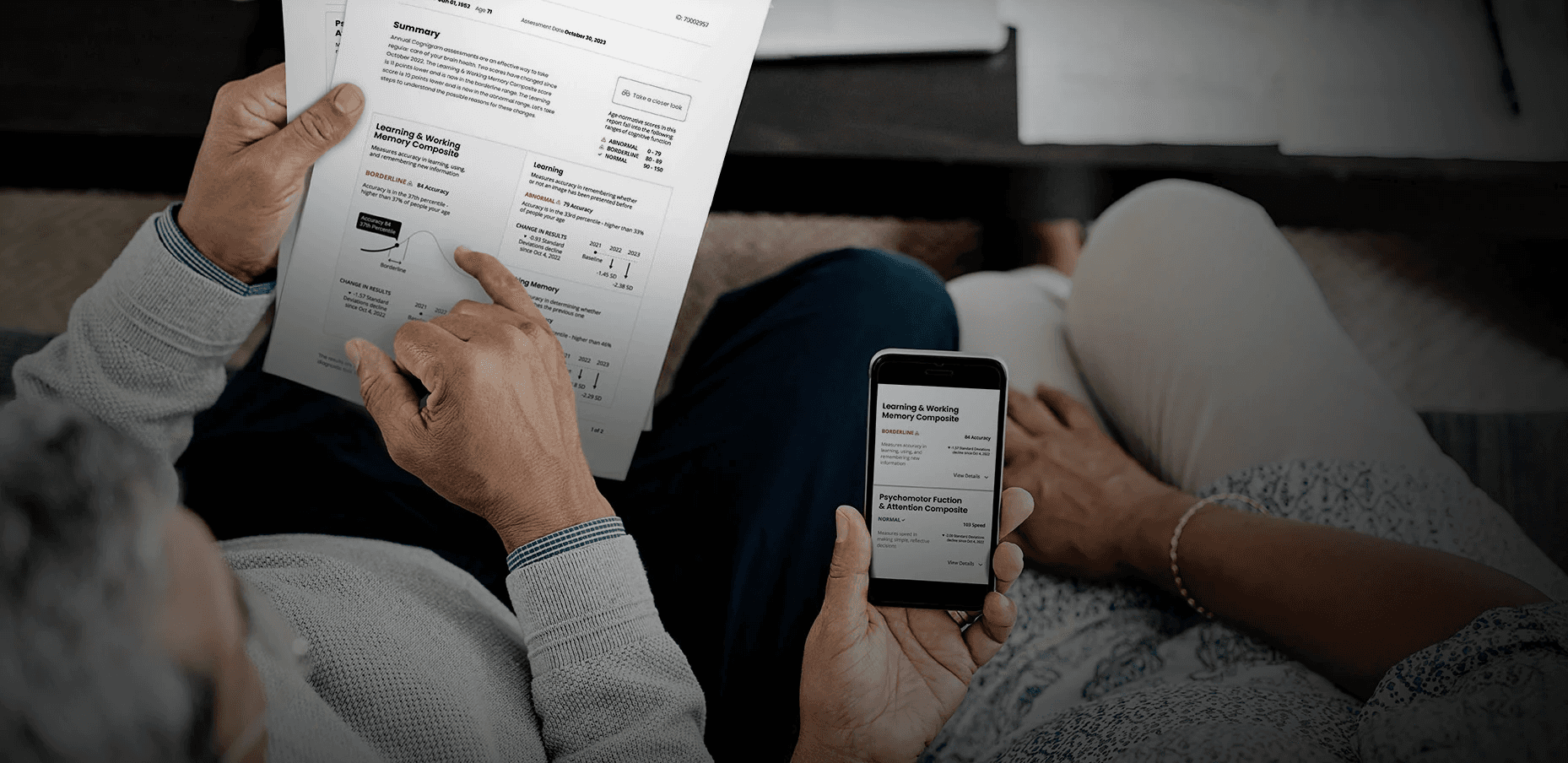
Cognigram is one of their crowning achievements. This HIPAA-compliant, FDA Class II-exempt digital cognitive assessment effectively detected mild cognitive impairment in more than 2000 clinical trials. Yet our early research revealed that commercial adoption of Cognigram would require behavior change across the care continuum. It would require Primary Care Physicians (PCPs) and older Americans to know that a product like Cognigram exists, be motivated to try it, have the skills to use it, and feel supported along the way. Our research also revealed that the Cognigram report wasn't just a touchpoint; it was a turning point in the assessment experience that could help catalyze the behavior changes needed to increase product adoption and inspire actions that advance brain health in clinics and homes across the U.S. But the visual communication of the results would require significant development. We were honored to lead the visual redesign of the Cognigram report.
Translating insights into action
he Prototyping Lab resulted in a 90% redesign of the report. The new report didn’t just deliver information. It delivered understanding. And understanding is the foundation for behavior change.
Key Enhancements
Established a strong visual hierarchy
Replaced the word 'test' with 'assessment'
Added a summary for interpretation at a glance
Added explanations of each cognitive domain
Replaced line graphs with bell curves to buffer the psychological impact of seeing cognitive function decline
Consolidated the report from 3 to 2 pages
Adapted the report for easy viewing online
Catalyzing conversations about brain health
The redesigned report now plays a pivotal role in scaling cognitive assessment across primary care. It gives:
PCPs a tool they can interpret confidently
Older adults a way to understand their results without fear
Families a shared language for discussing brain health
Practices a smoother workflow
Cogstate a scalable pathway to commercial adoption
Most importantly, it turns cognitive assessments into something people can discuss. By humanizing cognitive data, the work opens the door to earlier detection, more equitable conversations, and better outcomes for millions of older adults. And it brings us closer to a future where understanding your brain health is as natural and stigma-free as checking your blood pressure.