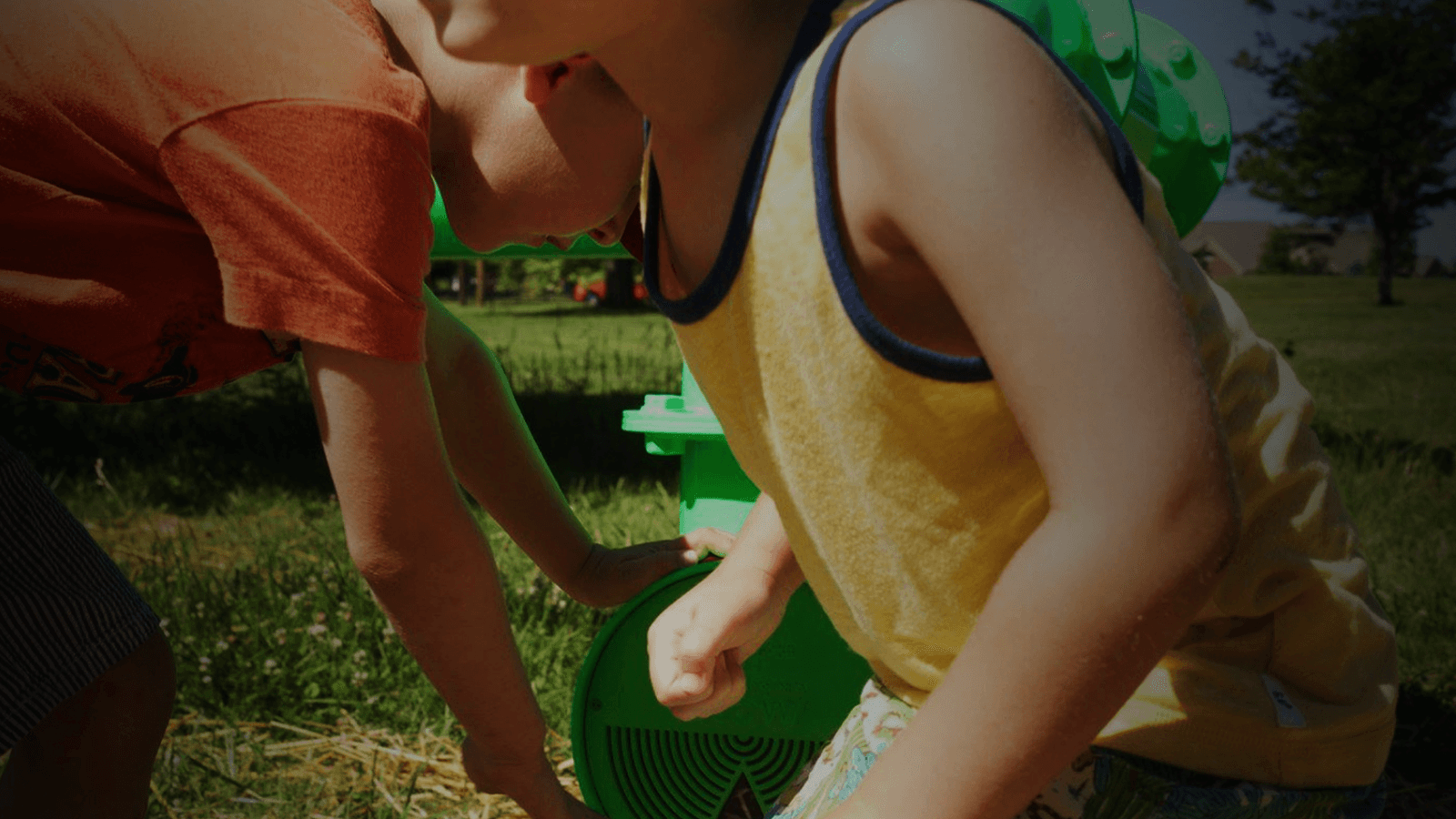
Two young children in park play with a large green pipe that emerges from the grass–part of an interactive public art installation built by Public Works Collaborative.

Sonifying data. Expanding groundwater awareness and stewardship.

Sonifying data. Expanding groundwater awareness and stewardship.

Groundwater is a source of life. In Kentucky, nearly 2,000,000 people rely on it every day. Yet people rarely think about the water that runs beneath the Bluegrass.

Because it exists largely out of sight, it often remains out of mind. And is becoming increasingly vulnerable. This is the paradox of infrastructure. The systems that sustain everyday life are often the systems we notice least. In 2015, Public Works partnered with the Kentucky Geological Survey to change this.

Approach

Designing for awareness, understanding and engagement

Awareness campaigns often assume information changes behavior. We know better. Inspired by Wendell Berry's belief that "For humans to have a responsible relationship with the world, they must be able to imagine themselves in it," we set out to make the invisible infrastructure of groundwater visible and audible.

Early on in design development, however, we discovered the challenge extended beyond public awareness. Scientists needed more data to effectively monitor groundwater across Kentucky. In some regions of the state, the most recent groundwater data was more than thirty years old.

Rather than treat these as separate challenges, we approached them as one. The result was Livestream—a participatory model for groundwater stewardship that combines an interactive public art installation, educational outreach program pilot, online archive, and remote monitoring system to help community members and scientists better understand and care for the water that runs beneath the Bluegrass. To bring the concept to life, we:

  • Analyzed groundwater systems across Kentucky's five physiographic regions to identify opportunities where scientific monitoring and community engagement could reinforce one another.

  • Designed a sonification toolkit that translates groundwater data into an interactive soundscape and online archive that community members could see, hear, explore, and discuss.

  • Tested dozens of soundscape prototypes with community members, scientists, educators, and local government to ensure the experience was intuitive, engaging, and educational as well as scientifically valid.

  • Actively engaged artists, engineers, educators, government agencies, community members, and scientists throughout the design process to ensure the model reflected both scientific knowledge and community mindsets, while building shared ownership of the outcomes.

Approach

Designing for awareness, understanding and engagement

Awareness campaigns often assume information changes behavior. We know better. Inspired by Wendell Berry's belief that "For humans to have a responsible relationship with the world, they must be able to imagine themselves in it," we set out to make the invisible infrastructure of groundwater visible and audible.

Early on in design development, however, we discovered the challenge extended beyond public awareness. Scientists needed more data to effectively monitor groundwater across Kentucky. In some regions of the state, the most recent groundwater data was more than thirty years old.

Rather than treat these as separate challenges, we approached them as one. The result was Livestream—a participatory model for groundwater stewardship that combines an interactive public art installation, educational outreach program pilot, online archive, and remote monitoring system to help community members and scientists better understand and care for the water that runs beneath the Bluegrass. To bring the concept to life, we:

  • Analyzed groundwater systems across Kentucky's five physiographic regions to identify opportunities where scientific monitoring and community engagement could reinforce one another.

  • Designed a sonification toolkit that translates groundwater data into an interactive soundscape and online archive that community members could see, hear, explore, and discuss.

  • Tested dozens of soundscape prototypes with community members, scientists, educators, and local government to ensure the experience was intuitive, engaging, and educational as well as scientifically valid.

  • Actively engaged artists, engineers, educators, government agencies, community members, and scientists throughout the design process to ensure the model reflected both scientific knowledge and community mindsets, while building shared ownership of the outcomes.

Outcomes

Outcomes

Building a participatory model for environmental stewardship

By integrating human-centered design, AI, data science, and embodied learning, each component of Livestream was designed to guide community members from groundwater awareness to understanding, engagement, and long-term stewardship.

Within the first weekend, the public art installation recorded over 35,000 interactions. That’s 35,000 moments of connection with an infrastructure many residents had never considered. But raising awareness was only part of the equation. Livestream:

  • Strengthened cross-sector communication 
and collaboration among scientists, educators, government agencies, nonprofit organizations, and community members

  • Expanded groundwater data collection from once every 30 years to once every 15 minutes

  • Equipped citizens and scientists with more knowledge, tools, motivation, and support to become stewards of groundwater

  • Demonstrated how sound and the built environment can work together to change how people understand complex systems and 
their roles within them


Impact

Impact

Expanding environmental stewardship from the ground, up

Livestream was never simply a public art installation or educational outreach program. It was an exploration of how design can expand environmental stewardship by helping people better understand, connect with, and care for the systems that sustain everyday life. Livestream effectively:

  • Made an invisible infrastructure perceptible Transforming groundwater data into sound enabled people to experience groundwater rather than merely learn about it.

  • Expanded groundwater stewardship Livestream challenged the assumption that monitoring and protection are the sole responsibility of scientists. By creating new opportunities for community members to see, understand, and connect with groundwater, the project expanded who could participate in stewardship and how stewardship unfolds.

  • Demonstrated the role of play as a precursor to behavior change Rather than telling community members they need to learn about groundwater, Livestream invites people to play. By playing, people discover how their actions impact groundwater and how groundwater impacts their everyday lives. In this context, people became active makers of meaning rather than passive recipients of information.

  • Provides a scalable model for environmental stewardship While Livestream focused on groundwater, the underlying approach can be applied wherever awareness, understanding, and care are disconnected—from climate resilience to healthcare, aging, and community development. The challenge may differ, but the opportunity is the same: expanding stewardship increases our collective capacity to notice, respond, and protect what sustains us.

Rendering of a public artwork that transforms groundwater data into an interactive soundscape to expand awareness and protection.
Custom-built motion sensors used to trigger sounds derived from groundwater data based on visitors' proximity to pipes within an interactive public art installation.
Public Works team members assembling large green pipes for a public artwork that translates groundwater data into an interactive soundscape.

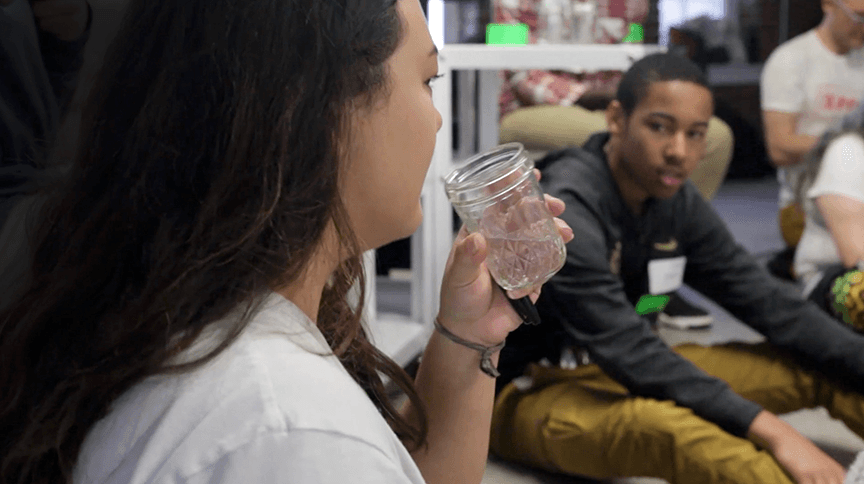
Public Works employs innovative design strategies to coax “unlearning,” their way of getting audiences to set aside preconceived notions and look anew at the world.

Louisville Public Media

Public Works.

Assembly required.

Contact us.

Collaborate with us.

Join our team.

Stay in the loop.

©2026

CURRENTLY WORKING IN :

Public Works.

Assembly required.

Contact us.

Collaborate with us.

Join our team.

Stay in the loop.

©2026

CURRENTLY WORKING IN :

Contact us.

Collaborate with us.

Join our team.

Stay in the loop.

©2026

NOW IN :

Public Works.

Assembly required.

Contact us.

Collaborate with us.

Join our team.

Stay in the loop.

©2026

CURRENTLY WORKING IN :