In Kentucky, nearly 2,000,000 people rely on groundwater every day. Yet people rarely think about the water that runs beneath the Bluegrass. It's out of sight and out of mind. Until something changes.
This is the paradox of infrastructure. The systems that sustain everyday life are often the systems we notice least. In 2015, Public Works partnered with the Kentucky Geological Survey to change this.
Designing for understanding and action at various scales
Awareness campaigns often assume information changes behavior. We knew better. People rarely change because they are told to. Personal experience, exploration, and discovery are much more effective strategies.
So rather than teach Kentuckians about groundwater, we decided to invite them them to discover it through productive play. At this point, the team began to wonder: What if Kentuckians could hear the water running beneath the Bluegrass?
Early on in design development, we discovered the challenge was bigger than awareness. Community members needed better ways to connect with, monitor, and protect groundwater. Scientists needed better data to understand and protect it. In some regions of the state, the most recent groundwater data was more than thirty years old. Rather than treat these as separate challenges, we approached them as one.
The result was Livestream—a statewide initiative that combined remote monitoring, data sonification, public art, and education to expand who could participate in understanding, monitoring, and protecting groundwater. To bring the concept to life, Public Works blended its capabilities in:
Systems Design Mapping groundwater systems and translating scientific models into accessible narratives, experiences, and opportunities for participation.
Humanizing Data Using a custom-designed sonification toolkit, we transformed groundwater data—including temperature, conductivity, turbidity, depth, and flow—into a public art installation.
Prototyping We developed and tested dozens of prototypes with residents, scientists, and community partners to refine both the experience and interpretation of the data.
Cross-Sector Collaboration We engaged scientists, artists, engineers, educators, government agencies, and community members to co-create learning experiences grounded in the ecology and identity of the area.
Behavior Change We used play as a mechanism to spark curiosity, reduce intimidation around scientific topics, and transform groundwater from an invisible infrastructure into an immersive experience that encourages exploration. The underlying premise was simple: people are more likely to care for what they can see, sense, understand, and imagine themselves being part of.
Building a participatory model for environmental stewardship
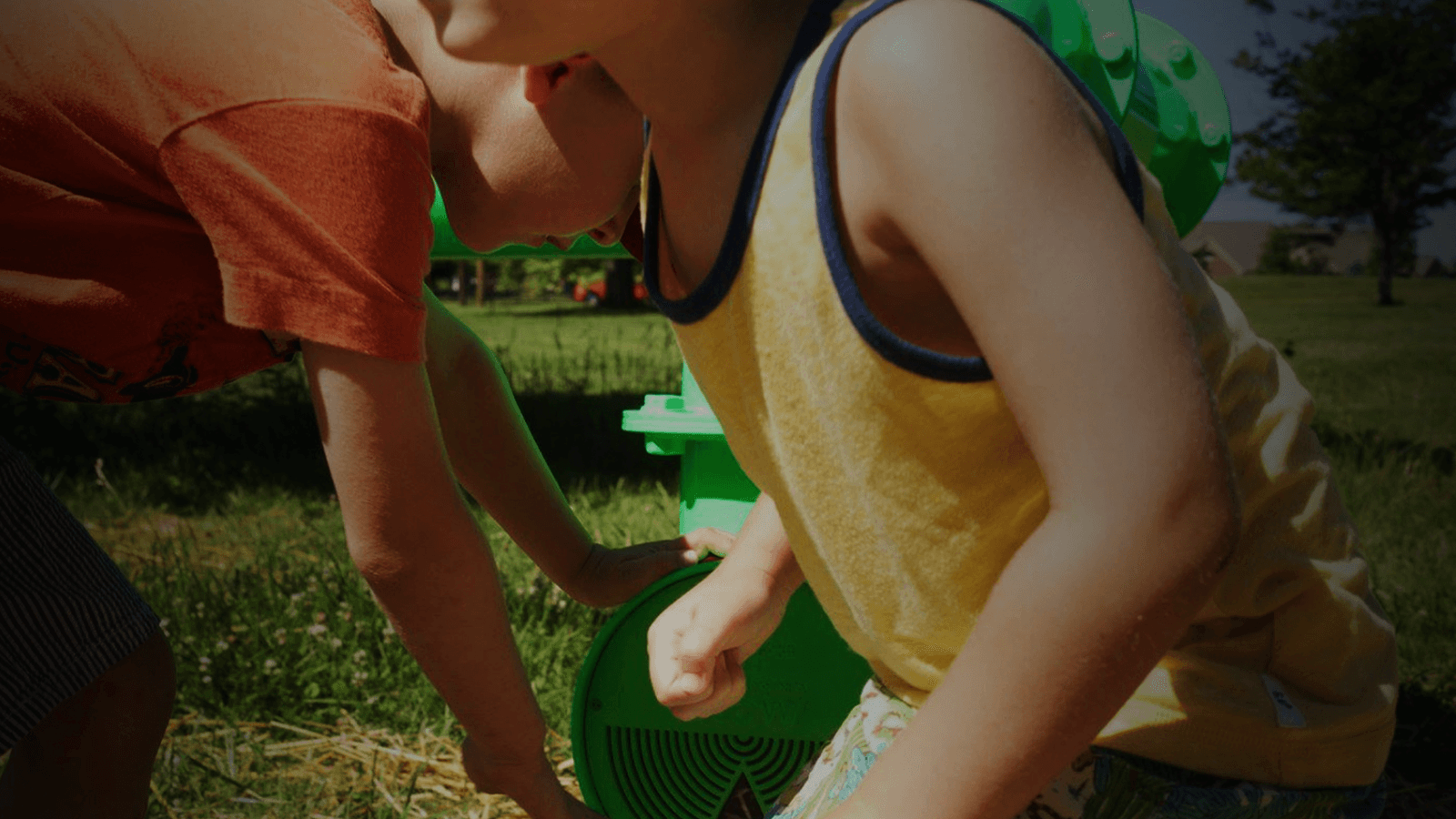
Livestream began with a simple ambition: transform groundwater data into a shared public experience. Using a custom-designed sonification system, we translated groundwater data from across Kentucky into an interactive public art installation. Nine large neon green pipes emerged from the ground in three clusters representing Kentucky's three major groundwater sources. Each pipe emitted sounds corresponding to different groundwater parameters—including temperature, conductivity, turbidity, and flow. As people moved through the installation, they literally played the ground.
What began as a public engagement initiative, however, quickly evolved into something larger: a new vision for how groundwater could be understood, monitored, and protected across the Commonwealth.
Rather than separate environmental monitoring from public engagement, Livestream explored how the two could work together. Remote monitoring, data sonification, public art, education, and community participation were conceived as parts of a single ecosystem—one designed to expand who could understand, monitor, and protect groundwater. Together, these efforts laid the foundation for Kentucky's first integrated groundwater monitoring network and a new model for environmental stewardship.
Key Outcomes
Foundation for Kentucky's first integrated groundwater monitoring network
Custom data sonification system
Permanent interactive public art installation
Educational outreach program
In its first weekend, the public art installation generated more than 35,000 interactions. That's 35,000 moments of curiosity, discovery, and connection to a system most residents rarely consider. And the first step toward stewardship.
Expanding environmental stewardship from the ground, up
Livestream was never simply a public art installation or educational outreach program. It was an exploration of how design can expand environmental stewardship by helping people better understand, connect with, and care for the systems that sustain everyday life.
By integrating environmental monitoring, data translation, public engagement, and education, Livestream addressed two interconnected challenges: scientists needed better data to understand and protect groundwater, while communities needed better ways to understand and participate in its stewardship. More specifically, Livestream:
Made an invisible infrastructure perceptible Transforming groundwater data into sound enabled people to experience groundwater rather than merely learn about it. An invisible infrastructure became something people could hear, explore, discuss, and better understand.
Expanded groundwater monitoring and protection Livestream challenged the assumption that groundwater monitoring and protection are the sole responsibility of scientists. By creating new opportunities for citizens to connect with, monitor, and protect groundwater, the project expanded who could participate in stewardship and how stewardship could occur.
Demonstrated the role of play as a precursor to behavior change Rather than asking people to learn about groundwater, Livestream invited them to interact with it. Through exploration, experimentation, and discovery, people became active makers of meaning rather than passive recipients of information. In doing so, the project demonstrated how play can transform curiosity into understanding, understanding into participation, and participation into stewardship.
Provides a participatory model for environmental protection While Livestream focused on groundwater, the underlying approach can be applied wherever participation and protection are disconnected—from climate resilience to healthcare, aging, and community development. The challenge may differ, but the opportunity is the same: expanding stewardship increases our collective capacity to notice, respond, and protect what sustains us.
The Livestream public art installation remains active in Jacobson Park, inviting people to listen, explore, and imagine the water that runs beneath the Bluegrass. And demonstrates a principle that continues to guide Public Works today: People are more likely to care for what they can perceive, understand, and imagine themselves being part of.