Communities combat isolation
Humans are hard-wired to connect. [1] Social isolation and loneliness pose significant health risks. Among older people, the risks include cardiovascular disease, stroke, diabetes, depression, and dementia. [2] Recognizing this, the World Health Organization (WHO) has urged global government agencies to find scalable solutions. [3] Following are two design strategies that harness the power of community to combat social isolation and loneliness among older people.
"... Even the simple act of going to the mall or taking a walk with a friend — produce positive effects on the body."
Lifelong learning is about more than just acquiring knowledge. It is a powerful practice that can improve one’s self-esteem, communication, and sense of purpose. It can also promote emotional resilience, well-being, and mental health. [4] This is largely why most senior living communities try to provide residents with various learning opportunities, from crafting to cardio classes.
In 2000, the visionary founders of Lasell Village in Massachusetts decided to take lifelong learning to the next level. And build a senior living community into the physical and social fabric of Lasell University. Village residents commit to an educational program rooted in their personal goals. [5] The benefits are being documented: "The college setting, the selection of courses, and interacting with students of all ages keeps me young at heart and mind.” Paul, Lasell Village Resident [5] To say the lifelong learning approach to senior living is popular would be an understatement.
Lasell Village has a waitlist of 300 households. [6]
Surrounding colleges actively recruit Lasell Village residents to participate in campus programs. MIT, for example, began Minds Across Generations. [7]
University Retirement Communities (URC) are popping up all over the U.S. [8]
However, the high costs associated with URCs make them unaffordable for many of our elders. [9] Moving forward, we must consider: How might we design lifelong learning opportunities that are affordable and accessible to all of our elders? Or perhaps better yet: How might we integrate senior living into the physical and social fabric to promote accessible and affordable learning opportunities throughout life (i.e., for all ages)?
We’re reminded of an intergenerational workshop that Public Works facilitated at the University of Kentucky in 2016. And wonder: What if schools, libraries, government agencies, and businesses facilitated more intergenerational engagements? Stay tuned. We’ve made a note to explore this opportunity in future posts.
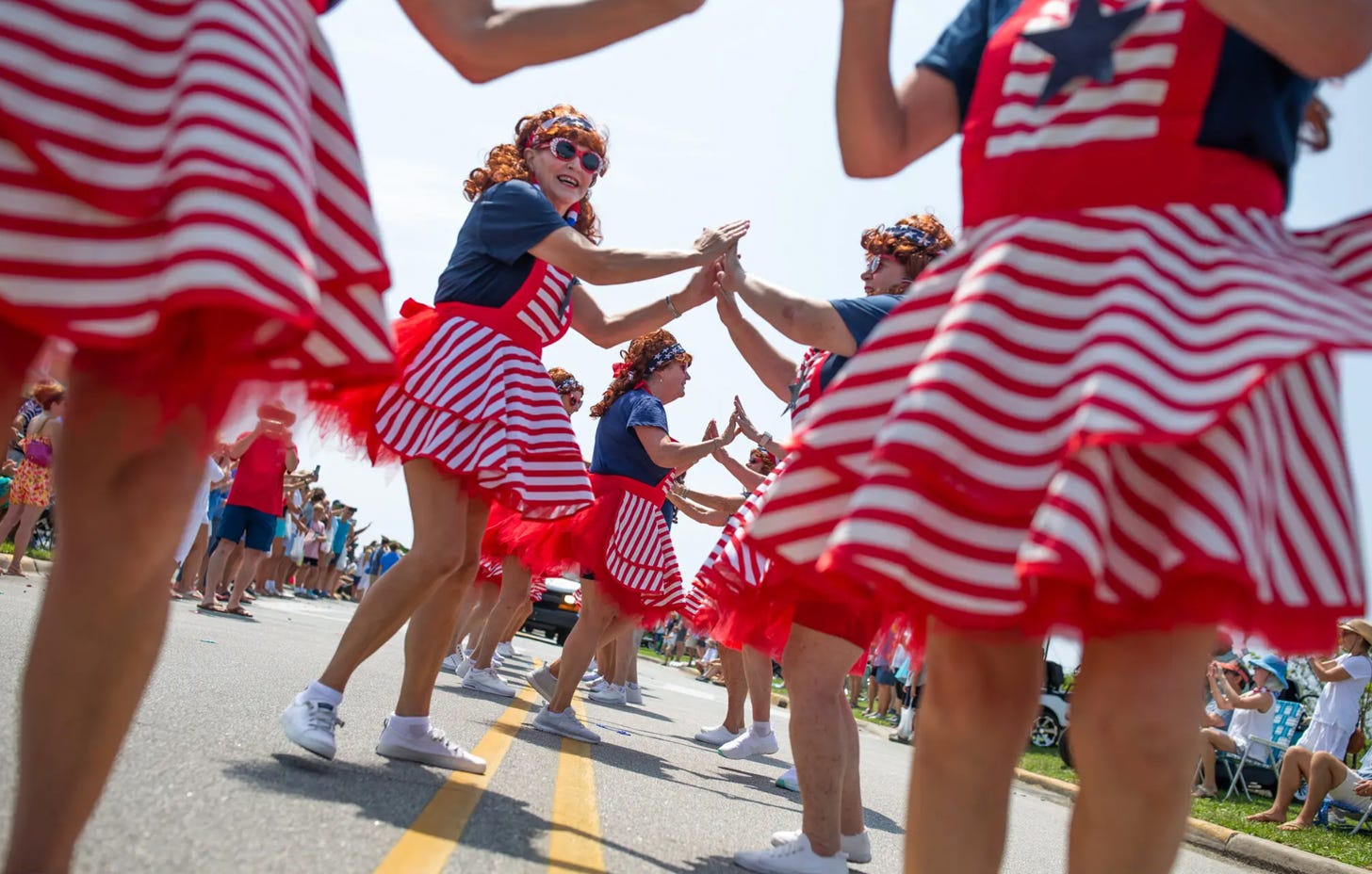
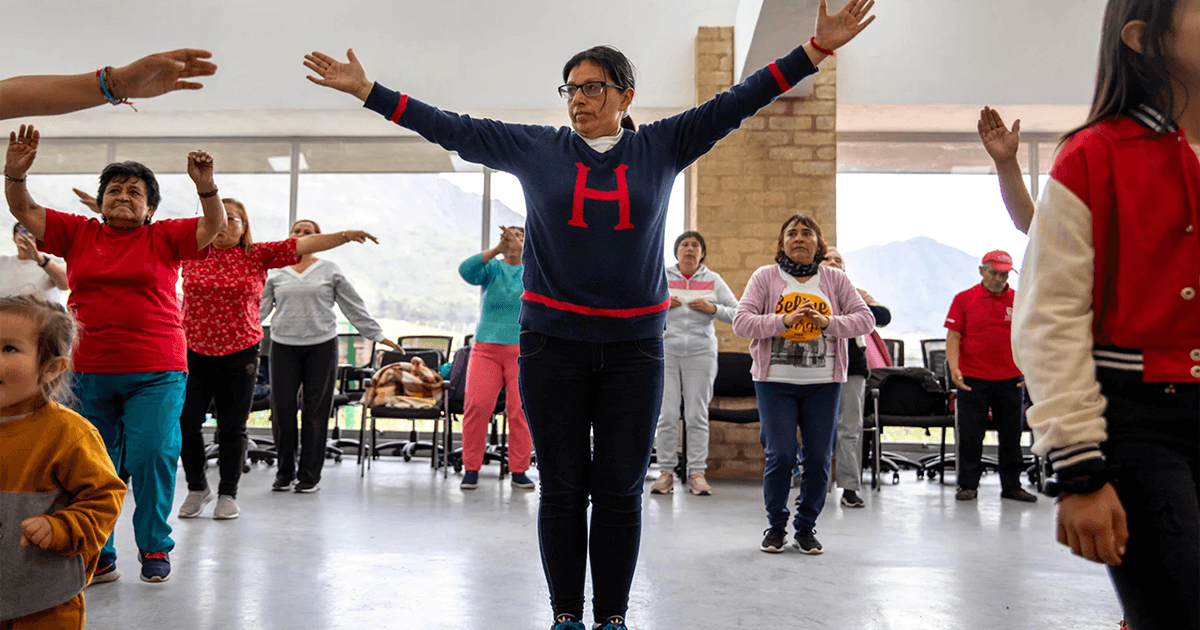
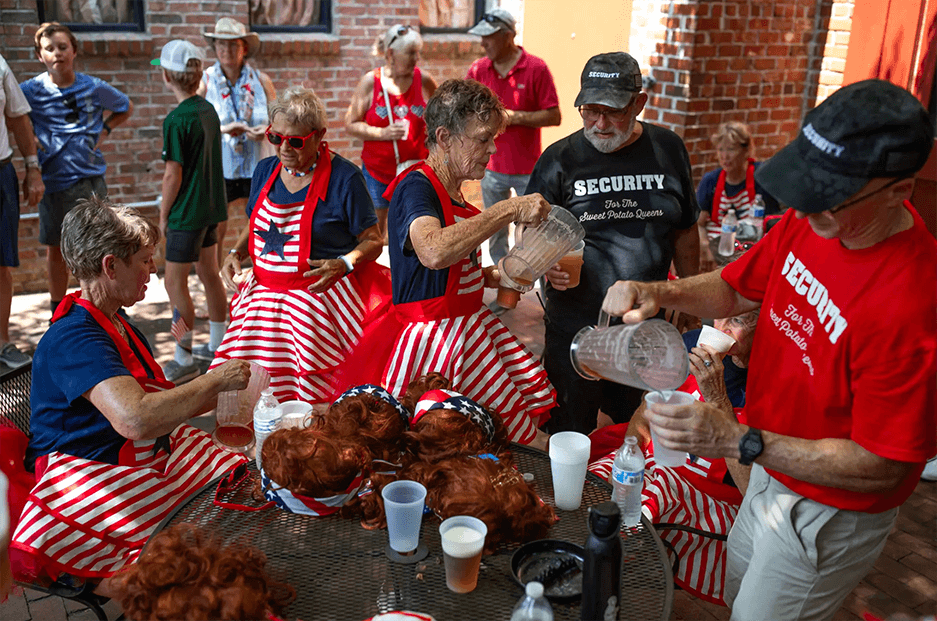
The Bodacious Belles are one of 6,500 women’s groups who affectionately refer to themselves as the Sweet Potato Queens. [10] The Belles range in age from 57 to 92. They dance together, sing together, and watch movies together. On occasion, they even perform at local events together.
These gatherings provide more than entertainment. They provide physical and emotional support for participants, many of whom are widows coping with the loss of their life partner. [11]
"Lifang Hou, a professor of preventative medicine at Northwestern University, said the positive feelings that come with seeking community — even the simple act of going to the mall or taking a walk with a friend — produce positive effects on the body. What these good hormones do is slow down our molecular aging,’ Dr. Hou said, because they help cells function better. ‘It’s like nutrition for us.’" [10] The Belles demonstrate the power of social connection to prolong quality of life.
Image Source: Madeline Gray for The New York Times, 2024