Where we age impacts how we age
Where we age impacts how we age. [1] The built environment is one of the primary social determinants of health. [2] It is particularly important in the context of aging given that older adults tend to spend more time in and around their homes. [3] Following are two signals that suggest adaptations to the built environment can advance the physical, psychological, and social health of our elders.
One of the most physically simple yet psychologically soothing adaptations to the built environment that we've seen to date was designed by The Benrath's Senior Center in Dusseldorf, Germany. It's a fake bus stop.
One of the most physically simple yet psychologically soothing adaptations to the built environment that we've seen to date was designed by The Benrath's Senior Center in Dusseldorf, Germany. It's a fake bus stop. [4]
Why would a senior center install a bus stop where buses never stop? At Benrath, many of the residents have Alzheimer's Disease or dementia. They can easily become disoriented and want to go home (even though they are home). [5] So they wander off. This is a dangerous and, at times, deadly scenario. [4]
To avoid sedating residents or locking them in their rooms, the staff at Benrath persuaded the transit authority to install a bus stop in front of the center. The result? Residents have a physical destination that also serves as a psychologically safe space for staff to soothe them back inside.
"The bus stop has changed how the staff approaches all residents—the staff has become more amenable to their patients’ insistences and more readily make allowances for a patient’s perceived reality. The bus stop was so successful that soon, other senior centers in the city installed their own faux stops..." [4]
For the full story, check out Lulu Miller's conversation with Benrath's Richard Neureither and Regine Hauch on Radiolab. [6]
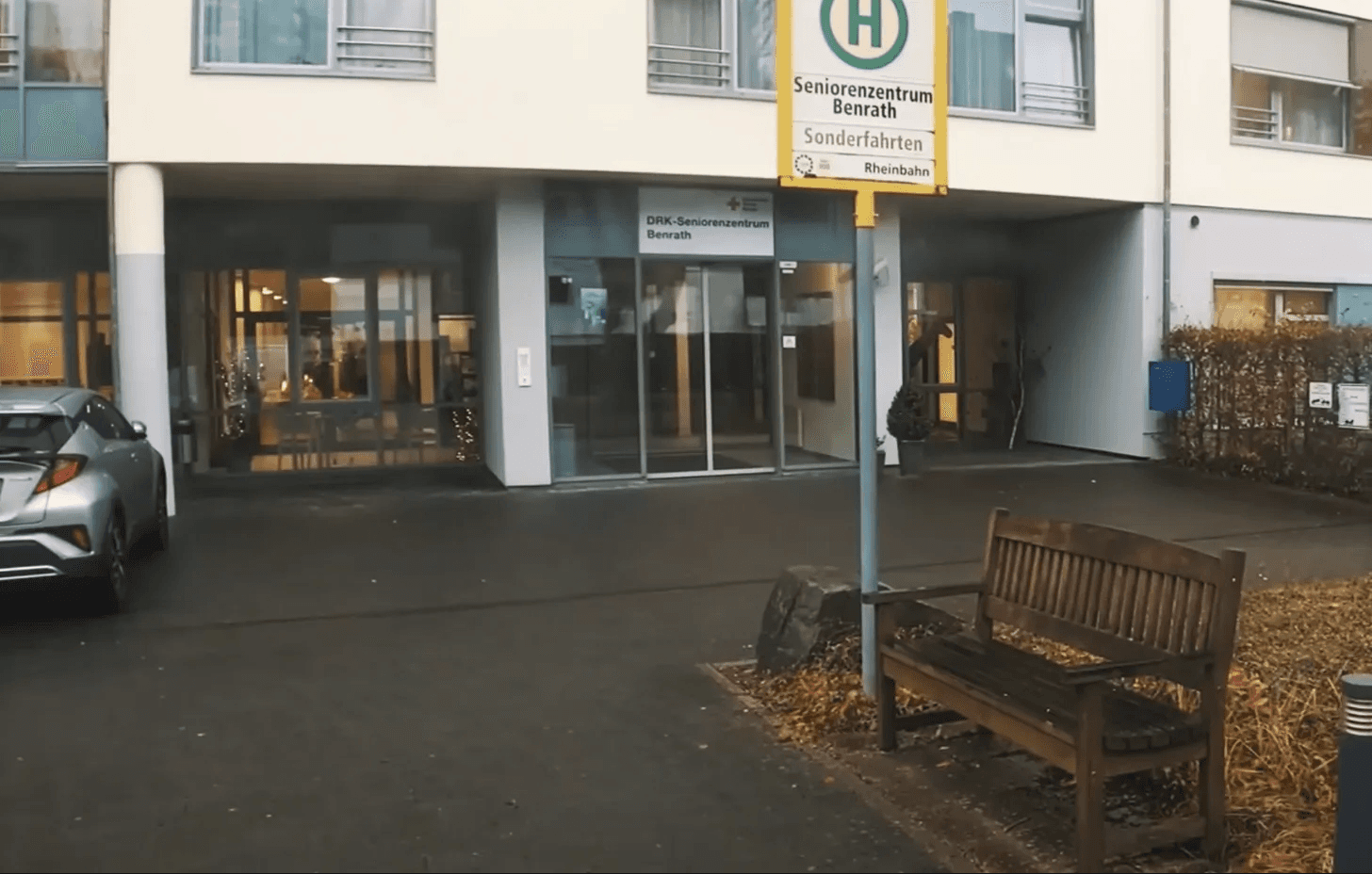
One of the most physically simple yet psychologically soothing adaptations to the built environment that we've seen to date was designed by The Benrath's Senior Center in Dusseldorf, Germany. It's a fake bus stop. [4]
Why would a senior center install a bus stop where buses never stop? At Benrath, many of the residents have Alzheimer's Disease or dementia. They can easily become disoriented and want to go home (even though they are home). [5] So they wander off. This is a dangerous and, at times, deadly scenario. [4]
To avoid sedating residents or locking them in their rooms, the staff at Benrath persuaded the transit authority to install a bus stop in front of the center. The result? Residents have a physical destination that also serves as a psychologically safe space for staff to soothe them back inside.
"The bus stop has changed how the staff approaches all residents—the staff has become more amenable to their patients’ insistences and more readily make allowances for a patient’s perceived reality. The bus stop was so successful that soon, other senior centers in the city installed their own faux stops..." [4]
For the full story, check out Lulu Miller's conversation with Benrath's Richard Neureither and Regine Hauch on Radiolab. [6]
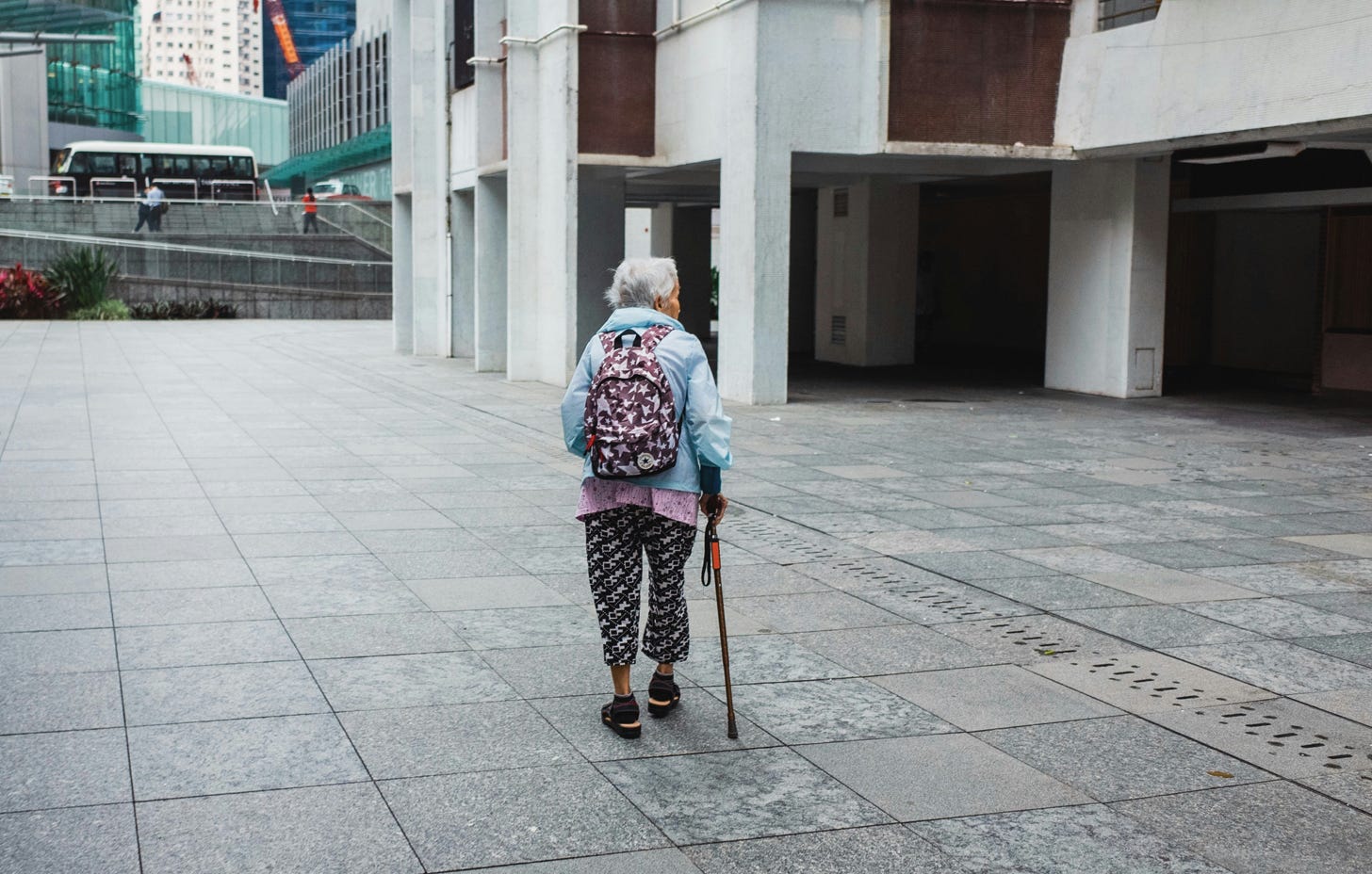
If given the choice, many older adults say they'd prefer to live in their home as long as possible. Aging in place can prolong independence, autonomy, and social connection. [7] Yet many homes lack the physical, social, psychological, and technical infrastructure to support the diverse needs of our elders. Why? In large part because there's a lack of diversity in architectural design and planning. And co-creation is not widely embraced within the profession. [8]
To fill part of the void, Victoria University professors Dr. Hing-Wah Chau and Dr. Elmira Jamei published a comprehensive list of design guidelines for age-friendly housing. [9] While these resources will be valuable for professionals in the field, Dr. Chau and Dr. Jamei call on policymakers to integrate these age-friendly standards for the built environment into legislation.
"The aim is to foster active ageing by optimising opportunities for older adults to maximise their independent living ability and participate in their communities to enhance their quality of life and wellbeing. An age-friendly built environment is inclusive, accessible, respects individual needs and addresses the wide range of capacities across the course of life... [To this end] Government and local councils should be more proactive." [9]
Image Sources: Intro photo by Brandon Lee on Unsplash / Bus stop photo from video Why Germany has 11 Fake Bus Stops by Mind the Map